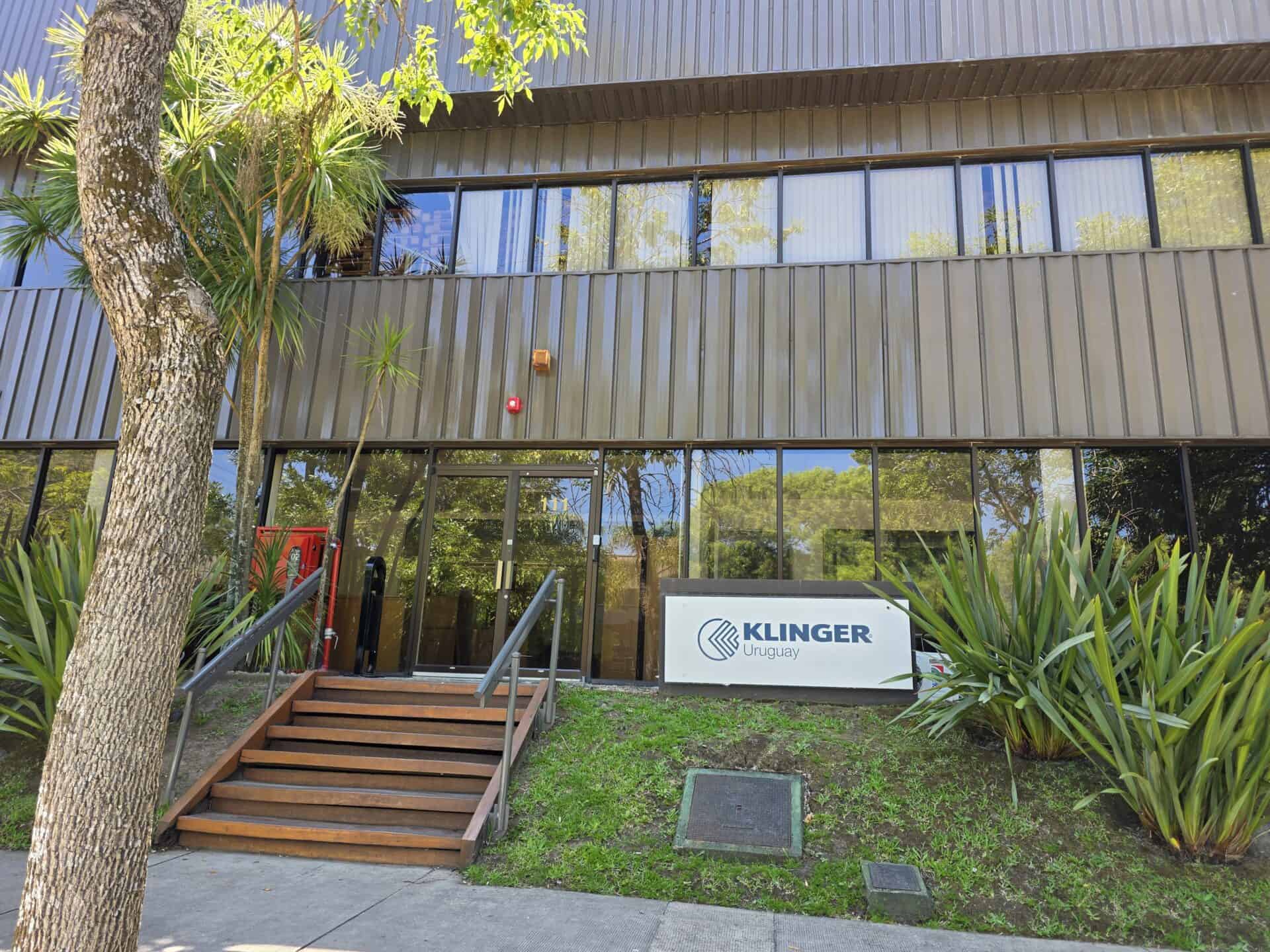
As Uruguay’s pulp and paper plants enter a new phase in their lifecycle and new projects emerge, KLINGER has taken decisive action by establishing KLINGER Uruguay. In this interview, Axel Barman, the newly appointed General Manager, outlines the strategic motivations, market potential and long-term ambitions behind the move.
What motivated the decision to establish a subsidiary in Uruguay? Why now?
We have been doing business in Uruguay since the early 2000s, when KLINGER Finland supplied solutions for major pulp and paper projects. Those plants are now reaching an age where the maintenance market is expanding rapidly. At the same time, new mills are being planned in the region. Having a local presence enables us to support both directly, efficiently and in the customer’s native language.

In what ways does Uruguay’s P&P landscape differ from that of the rest of South America?
The plants themselves are similar. What sets Uruguay apart is that all its facilities are located in free-trade zones. Suppliers must also operate within these zones to remain competitive. This affects everything, from company registration to daily logistics.
What opportunities do you foresee?
We were one of the first companies to establish a local entity. This demonstrates our long-term commitment, increasing our value in both new projects and lifecycle support. Having a local presence sends a strong message to our customers.
How will KLINGER Uruguay position itself in terms of technology, sustainability, and service quality?
We have nearly 100 years of global pulp and paper expertise. Ultimately, the most cost-effective solution is the one that minimizes downtime costs over the lifecycle. Our task is to demonstrate that value.
What solutions will you offer?
We offer everything from gasket cutting and calculations to valve-actuator assemblies, consulting, and training. We start with the Finnish portfolio and adapt to regional needs.
Contacts mentioned in the article:
Axel Barman, General Manager of KLINGER Uruguay
Is the focus on new installations, upgrades, or MRO?
All of the above. Older mills require MRO services, recent projects are exiting their warranty phases, and new plants are in the planning stages. Uruguay is positioned for growth, and our setup supports every stage.
What are the next steps for KLINGER Uruguay?
Initial processes have been slowed by free-zone bureaucracy, but once they are complete, we will focus on learning from the customer interface. This insight will guide our development.
Thank you.