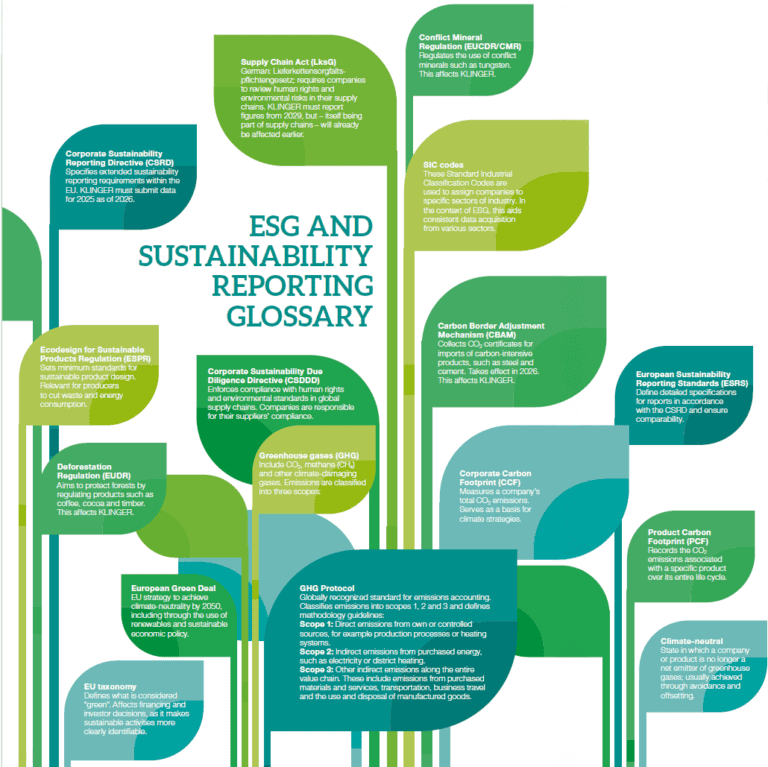
Regardless of the fact that mandatory reporting has been deferred thanks to a simplification of the regulations, KLINGER has decided to use the time gained strategically. Waiting was not an option. At KLINGER, we regard sustainability as a long-term strategy, as “transparency is increasingly becoming a key factor for building trust and a competitive edge,” says Yusuf Avci, ESG Manager at KLINGER Holding.
Clear ESG priorities
KLINGER established a common understanding of ESG data as early as 2024, followed by the definition of clear responsibilities and operational implementation in 2025. The three key fields of action are:
- Implementation of standardized ESG software
- Establishment of structured data provisioning across all KLINGER companies
- Further development of greenhouse gas accounting, in particular Scope 3
To avoid additional interfaces, utilize existing expertise and create a uniform, audit-capable data basis, KLINGER Holding has implemented ESG software that is based on the same platform as the existing financial reporting system. Each subsidiary records its ESG data independently, while the holding company consolidates this data throughout the Group to ensure a consistent overall picture.
Data is created where responsibility lies
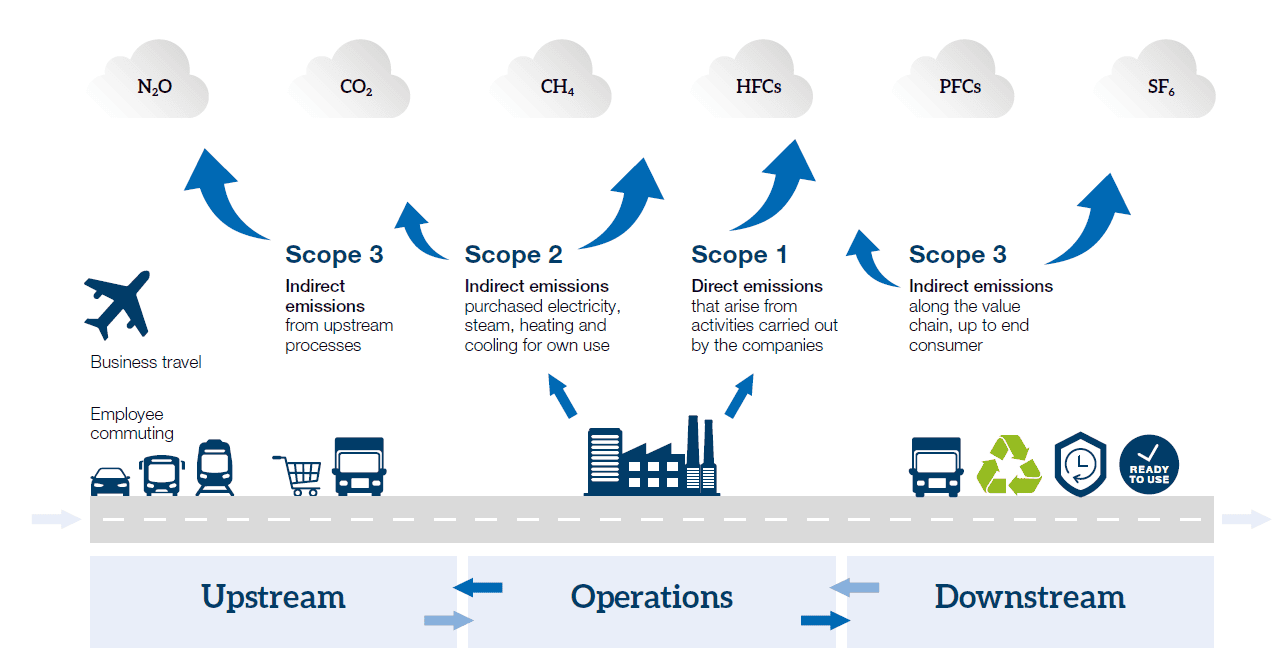
“While Scope 1 and 2 are already well established, Scope 3 was our biggest challenge,” says Ines Weikl of Group Controlling at KLINGER Holding. Scope 3 comprises numerous indirect emissions along the entire value chain. With 55 business units and 93 locations, the base year 2024 provides a comprehensive, realistic data set as a benchmark for comparability, prioritization of the key emission sources and targeted action planning. Structured processes, transparent communication and Group-wide harmonization proved to be critical to the project’s success. With a uniform ESG system, clearly defined responsibilities, a defined base year and in-depth greenhouse gas accounting, KLINGER has laid a firm foundation for a more sustainable future.