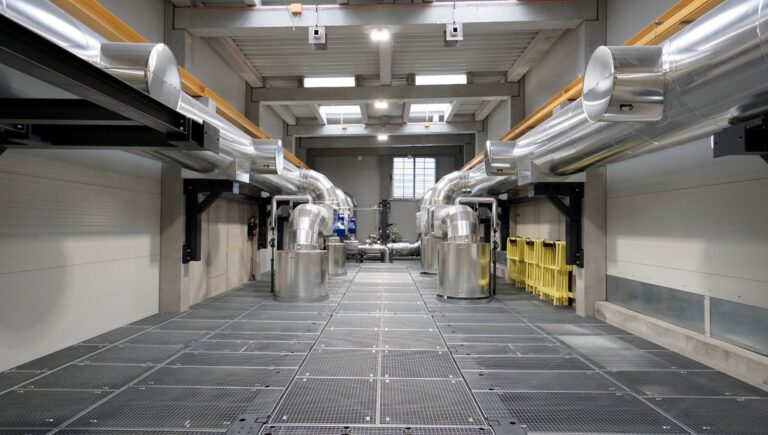
Combined heat and power (CHP) is the simultaneous production of thermal energy and electricity from a single source of fuel. While traditional systems use separate processes to create these two utilities, CHP captures and repurposes the heat that is produced during electricity generation. This method increases operational efficiency from 50 to 90 percent, while also putting less expense on grid infrastructure and will be implemented at the new Dradenau combined heat and power plant at the port of Hamburg. This technology is highly preferred by regions pushing to meet net zero, leading to a wave of plant conversions.
Contacts mentioned in the article:
Hilal Pehlivan, Sales Engineer at KLINGER Turkey
Kaşif Demet, Sales Manager at KLINGER Turkey
Andreas Schwarz, Sales Manager in Germany at KLINGER Fluid Control
Custom joint expertise
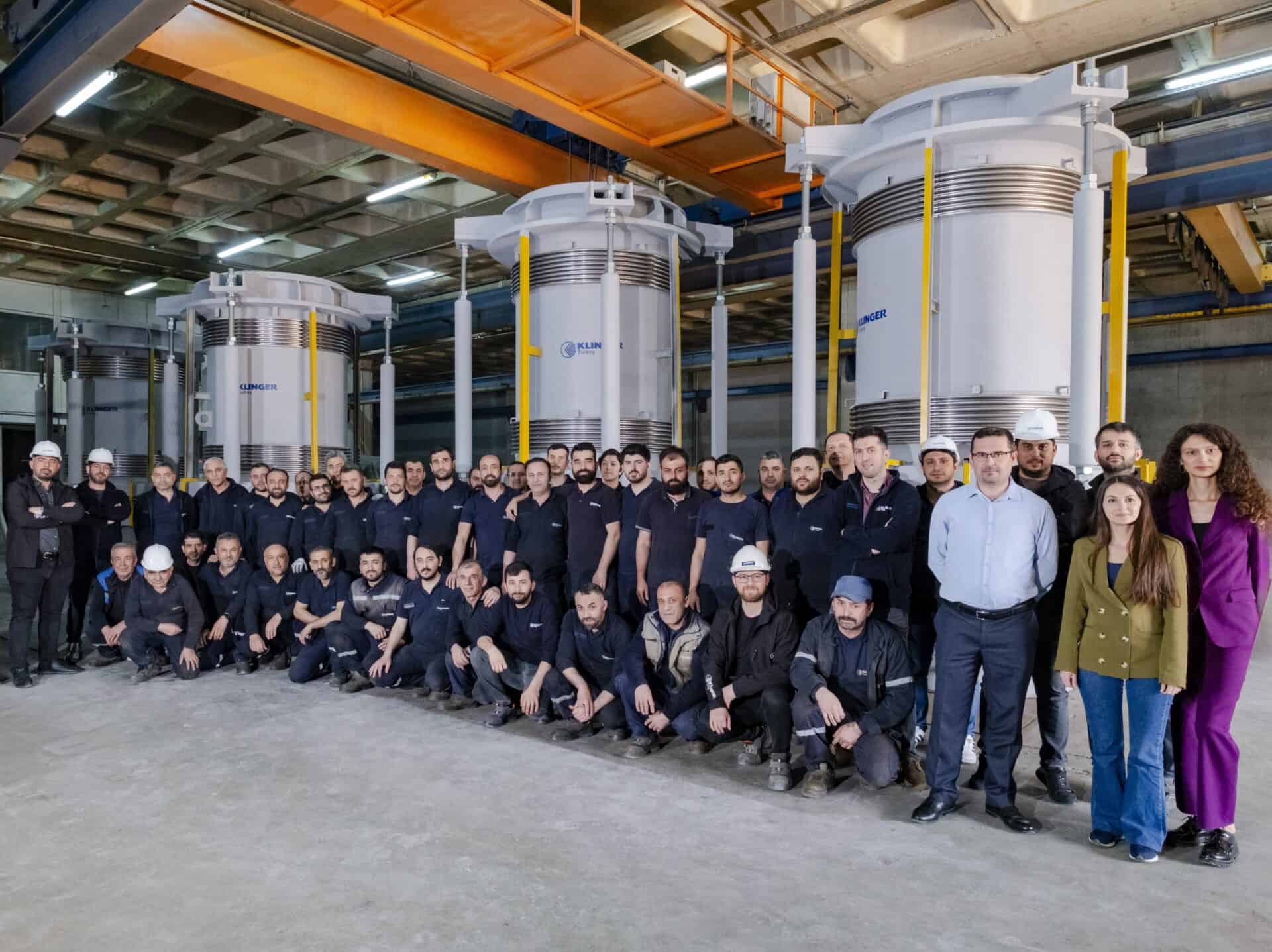
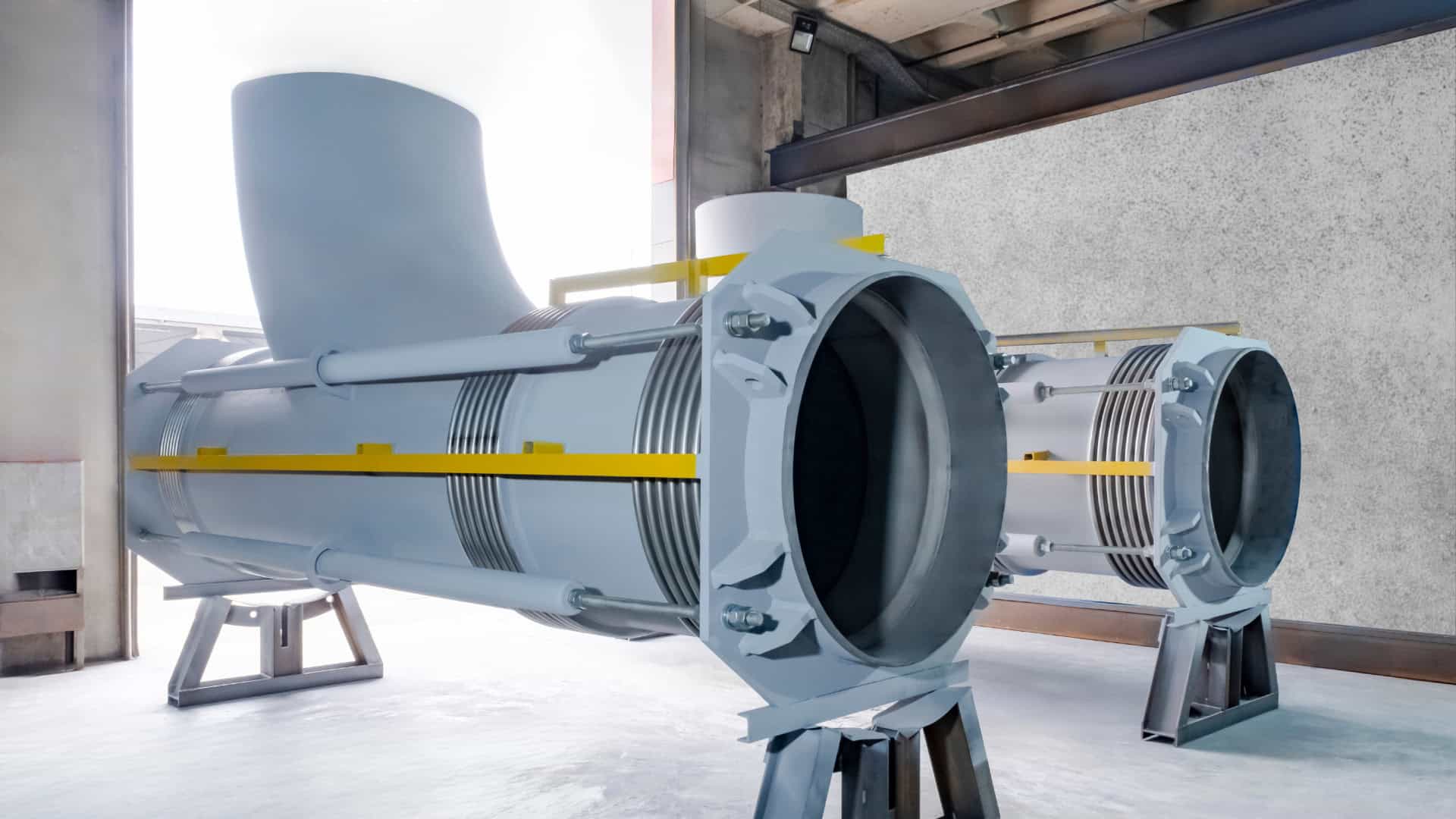
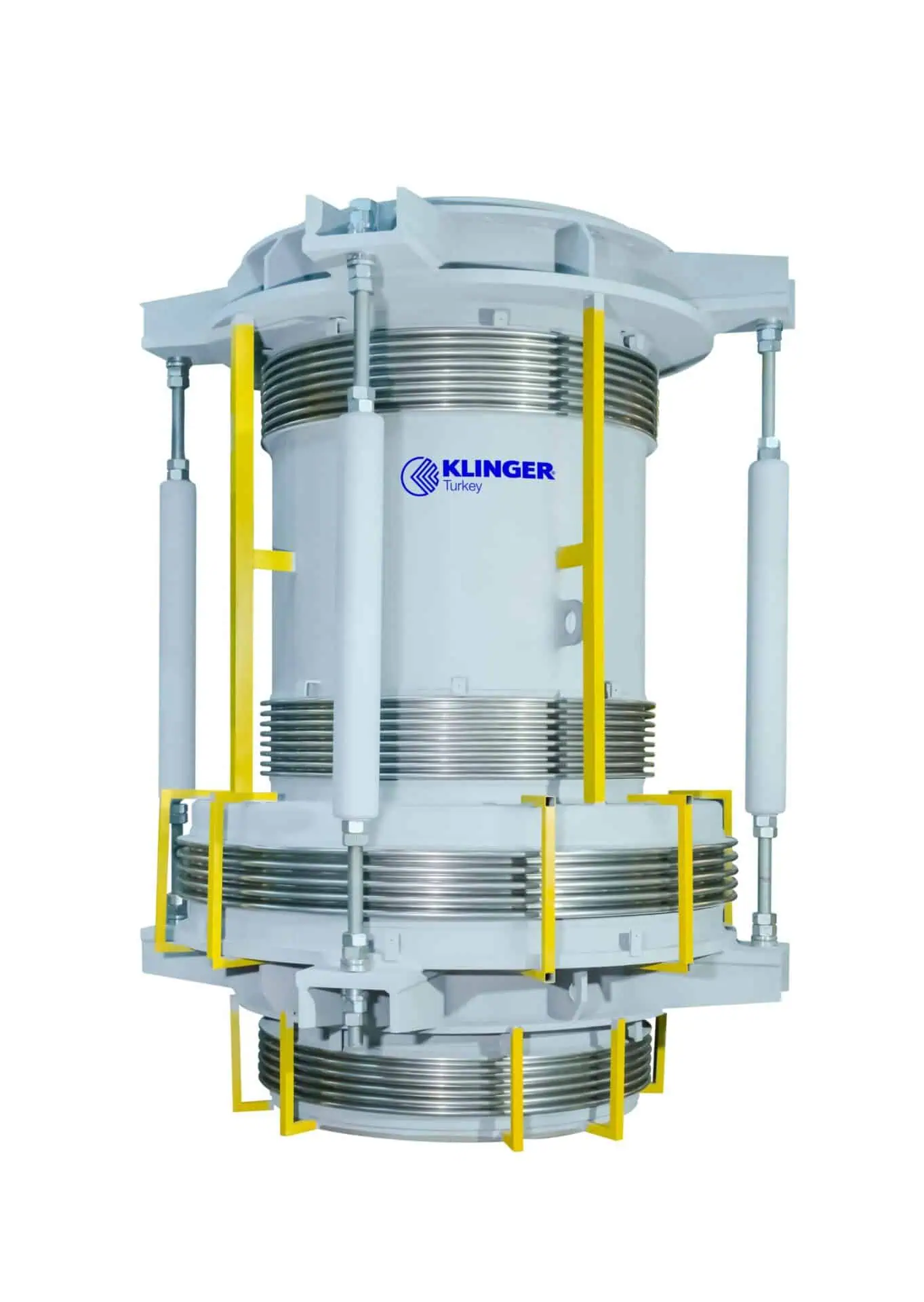
As a trusted manufacturer of precision expansion joints, KLINGER Turkey is uniquely positioned to meet the needs of this ambitious and ground-breaking power plant, and they were awarded the contract for the project managed by the Joint Venture Uniper-ENKA, the contractors. Natural gas turbines and a waste heat recovery system will be supported by KLINGER inline pressure balanced and elbow pressure balanced expansion joints, in sizes ranging from DN150 to DN1600. These custom joints are used on critical pipelines to cushion movement, reduce thermal stress from extreme temperature changes, and absorb dynamic loads. As explained by Sales Engineer Hilal Pehlivan, KLINGER Turkey’s involvement early in the planning stages was a major factor in ensuring that everything proceeded according to plan.

“From the very beginning of the project, all analyses and preliminary studies were conducted in coordination with the stress analysis team. Our expertise in the subject made a significant difference.”
Kaşif Demet (left) and Hilal Pehlivan (right, quote) of KLINGER Turkey are proud of what the team achieved.
Also key to the project’s success was Sales Manager Kaşif Demet, who led the sales strategy and managed project coordination from start to finish.
Extensive technical and quality checks during the design, manufacturing, and installation processes are yet another way that KLINGER Turkey earns customer trust. All materials for Dradenau met stringent temperature and corrosion specifications, while the joints were designed and manufactured per EJMA, EN14917, EN13480-3, and VGB R507 L standards. Quality control also complied fully with ISO 9001 and customer specific audits.
KLINGER Turkey delivered the largest and heaviest expansion joints to date, even faster than listed in the original proposal. Before packaging, each joint endured full radiographic testing, liquid penetrant testing, and hydrostatic testing. By following an exacting quality plan, KLINGER Turkey was able to prove safety, quality, and traceability for every shipped part.
Large-scale contract
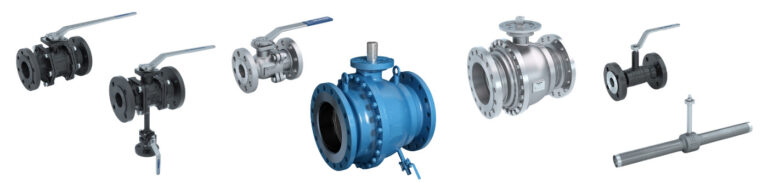
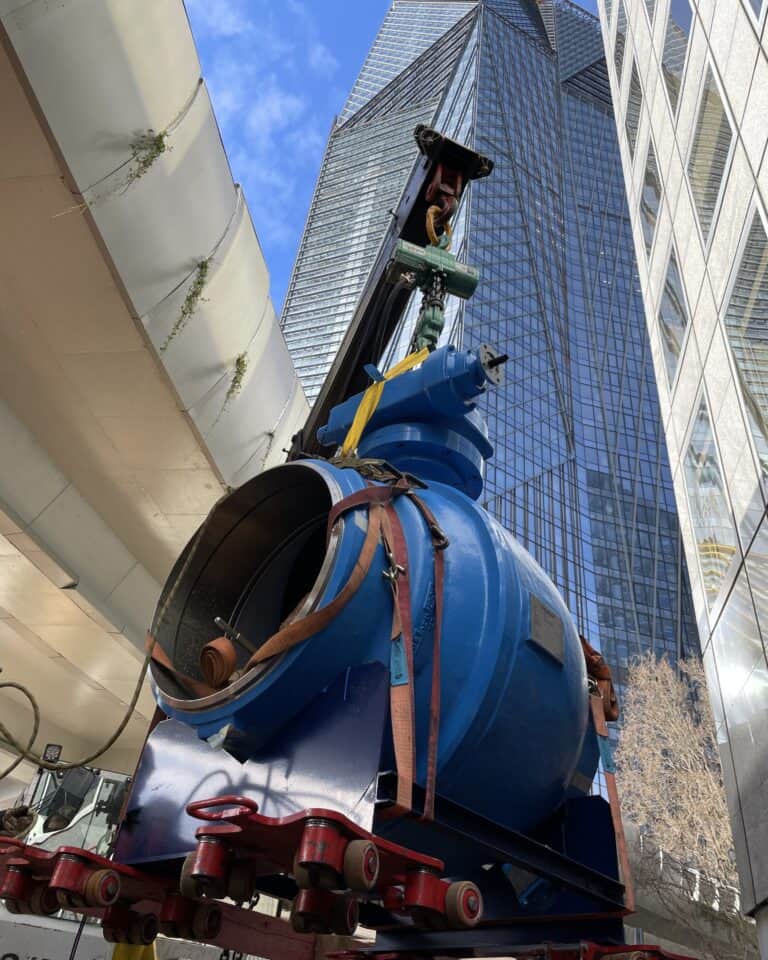
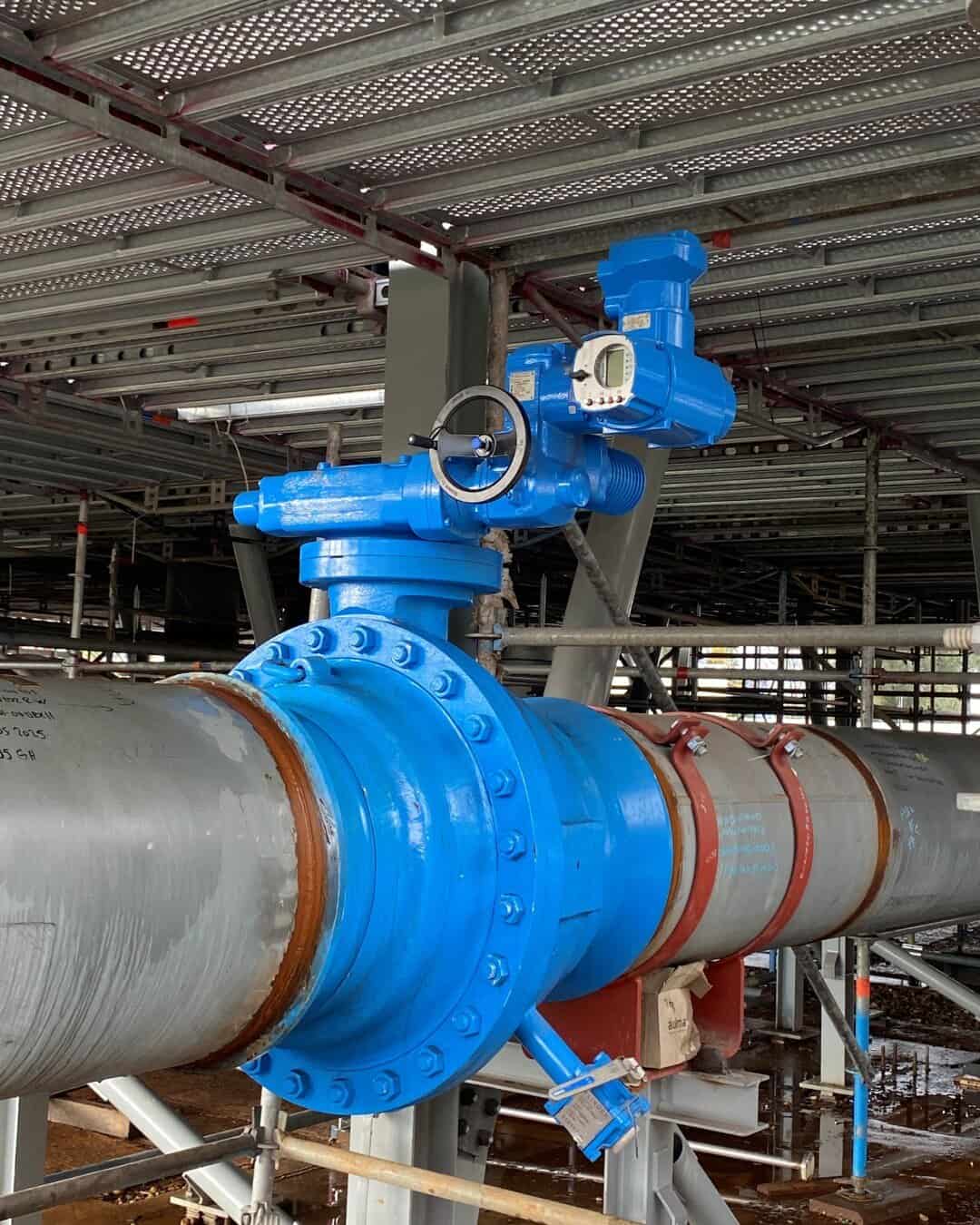
A lot of parts were also shipped from another KLINGER site: Sales Manager Andreas Schwarz recalls the challenge of wading through an Excel spreadsheet of around 1000 items. The reason for this marathon: KLINGER Fluid Control had been awarded an unusually large-scale contract to supply ball valves for the project. The total order volume: five million euros. Naturally, this also involved ample work for KLINGER Fluid Control.
Uniper-ENKA ordered a total of 2000 ball valves. KLINGER Fluid Control received the request for quotation in January 2023. “It took us seven months to agree the exact technical specifications and draw up the service specifications. We finally won the contract in August,” says Andreas. In the course of the collaboration, the challenges mounted. As nominal widths, materials and drive types changed as the project progressed, numerous revisions had to be made to the valves.
Negotiating the details
For KLINGER Fluid Control, the project evolved into a highly time-sensitive undertaking: The originally scheduled delivery date in early 2024 was adjusted in line with the project’s dynamic requirements. “At the same time, the power plant’s construction schedule was also revised. This proved advantageous, as it provided additional scope to refine the technical details together with the customer,” says Andreas. And there was indeed much to coordinate, including the selection of different valve types. And there was plenty to discuss, such as the different valve types. Many of the supplied valves were of the double block & bleed type, for example. Andreas explains,

“With these, you can check the function of the seals and gaskets using a test and drain cock. These are needed when maintenance is carried out on pipework, which the valve must seals off reliably.”
Andreas Schwarz, Sales Manager in Germany for KLINGER Fluid Control, relied on his wealth of experience with large-scale energy projects.
In general, district heating pipework is designed to operate reliably for many decades, maintenance work on it is the exception rather than the rule. But should the unlikely event occur and a valve causes problems, KLINGER Fluid Control has it covered: “All ball valves are designed with multi-part housings. This means they are easy to maintain and can be fully dismantled, if necessary,” says Andreas.
Some months will yet pass before the valves see active use at the Dradenau power plant. Hamburger Energiewerke plan to decommission the Wedel cogeneration plant at the end of 2026. The Hafen energy park with its combined heat and power turbine plant will then take over heat production for western Hamburg. Wanting to move the energy transition along, Germany is planning further gas-fired power stations. For KLINGER Fluid Control, this means further opportunities for major contracts, for example in Hamburg and Berlin, where the company is again tendering for major projects.
Fact box
Order list:
Valves by KLINGER Fluid Control:
- 220 Ballostar KHSVI DN150–DN800 series
- 1780 Ballostar KHA DN15–DN100
Expansion Joints by KLINGER Turkey:
- inline pressure balanced expansion joints DN150-DN1600
- elbow pressure balanced expansion joints DN150-DN1600