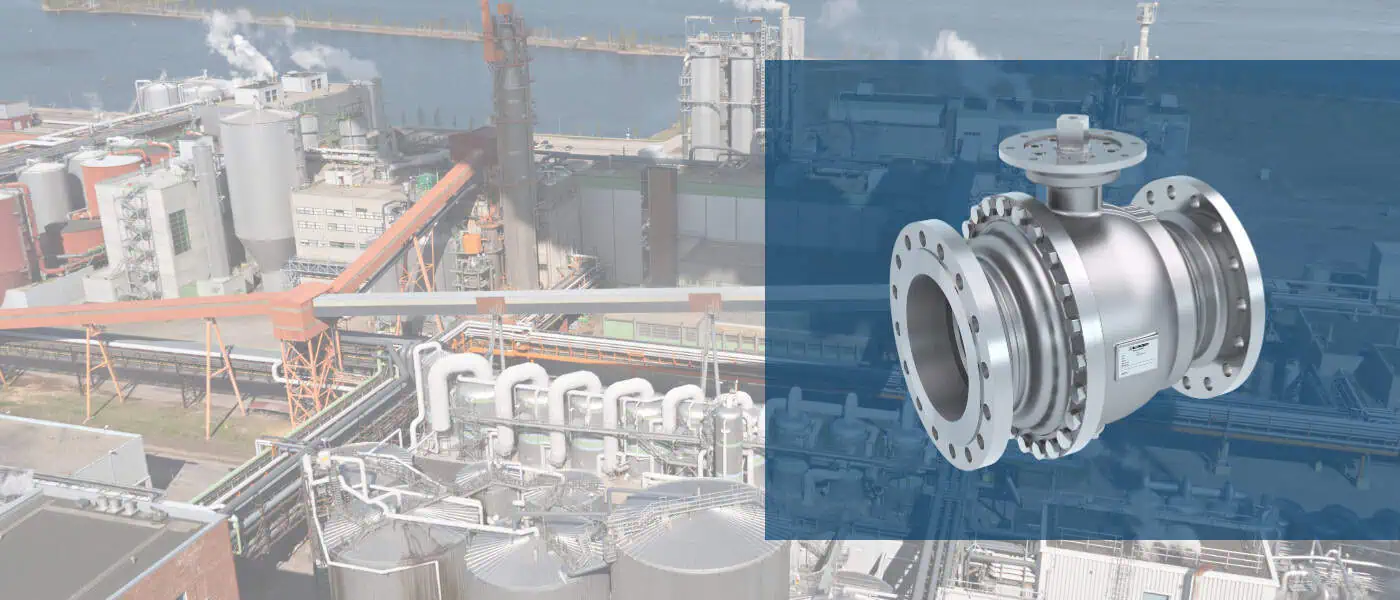
The highly corrosive or abrasive media and media with a high solids content occurring in the paper industry place extreme demands on valves. “But valves must withstand challenging conditions in other sectors, too, such as the steel industry and geothermal energy. In short, the Ballostar KHI-F is used wherever other valves hit the limit,” says Gerhard Gruber, application engineer at KLINGER Fluid Control. He was involved in the development of the new ball valve at KLINGER Fluid Control and knows its technical specifications like the back of his hand. And they pack a punch:

“Compared to the size DN 200 predecessor, for example, we were able to reduce the valve body’s weight from 107 to 85 kilograms for the KHI-F. We achieved this by reducing the body’s wall thickness and the weight of the ball by 24 percent.”
Gerhard Gruber is an application engineer at KLINGER Fluid Control and knows what the new Ballostar KHI-F is capable of
As well as making it easier to install the valve, this saves on materials, thereby reducing the production costs. These savings, in turn, are passed on to the customers.
Increased temperature range
Improvements were also achieved in the temperature range. Thanks to the new O-rings that seal the shaft stem, the KHI-F can now operate at temperatures from -10 to +250 °C (+14 to +482 °F). “For applications that handle very cold media, down to -45 °C (-49 °F), we can fit special low-temperature O rings. For ammonia applications in the temperature range from -30 to +125 °C (-22 to 257 °F), we use a special ammonia O ring”, and for gas applications from 0 to +150 °C (0 to 302 °F), a special gas O ring is used, says Gerhard. But the most significant improvement, he adds, is in the flange that gives the valve its name.
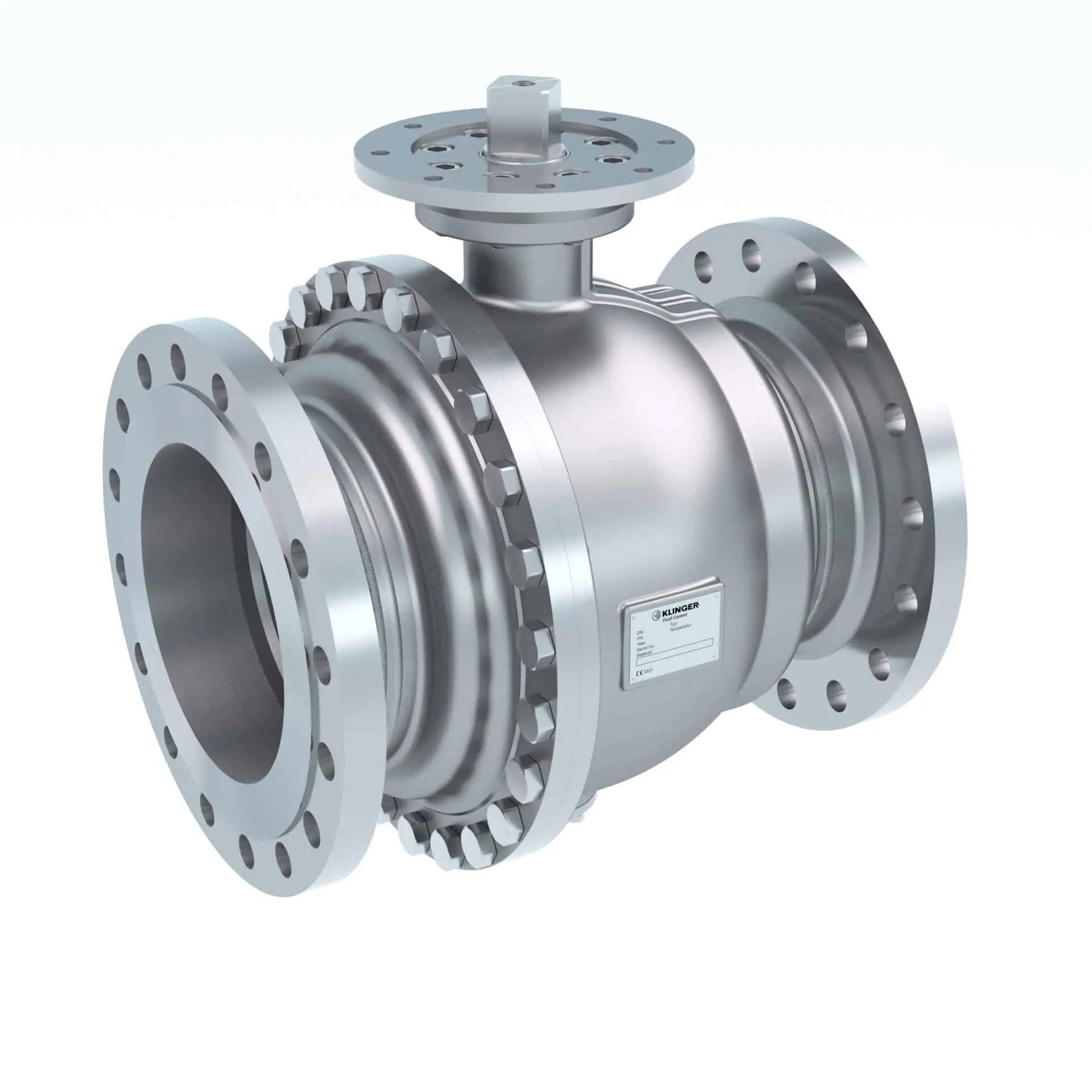
The flange makes all the difference
By fitting so-called welding neck flanges, the team at KLINGER Fluid Control has been able to significantly expand the ball valve’s range of applications. “Offering the right flange for various pressure ranges, we have increased the diversity of possible flange connections. The flange plate is now of a standard design, which will make work much easier in many applications,” says Gerhard. Production of the KHI-F at the Gumpoldskirchen site has already started, and some units have already been delivered: A pulp and paper project using the new valves was recently completed in Spain. Gerhard estimates that around 200 to 300 units of the KHI-F will roll off the production line at KLINGER Fluid Control each year.
Contacts mentioned in the article:
Gerhard Gruber, Application Engineer at KLINGER Fluid Control
Fact box
Did you know…
… that the KHI-F is supplied with Nord-Lock washers for the trunnion as standard? These ensure that the screws do not work loose. This is particularly important in pipework that is prone to vibration, which could potentially be transmitted to the trunnion of the ball valve.
… that KLINGER Fluid Control has also improved the ways the body halves of the KHI-F are joined? The previously used nuts and bolts have been replaced with cap screws here, which simplifies handling and increases the valves’ mechanical strength.
… that the KHI-F has additional Klingersil C-4430 gaskets at the joint between the two body halves and at the trunnion, and therefore, unlike its predecessor, fulfills the Fire Safe and ISO 15848 requirements.