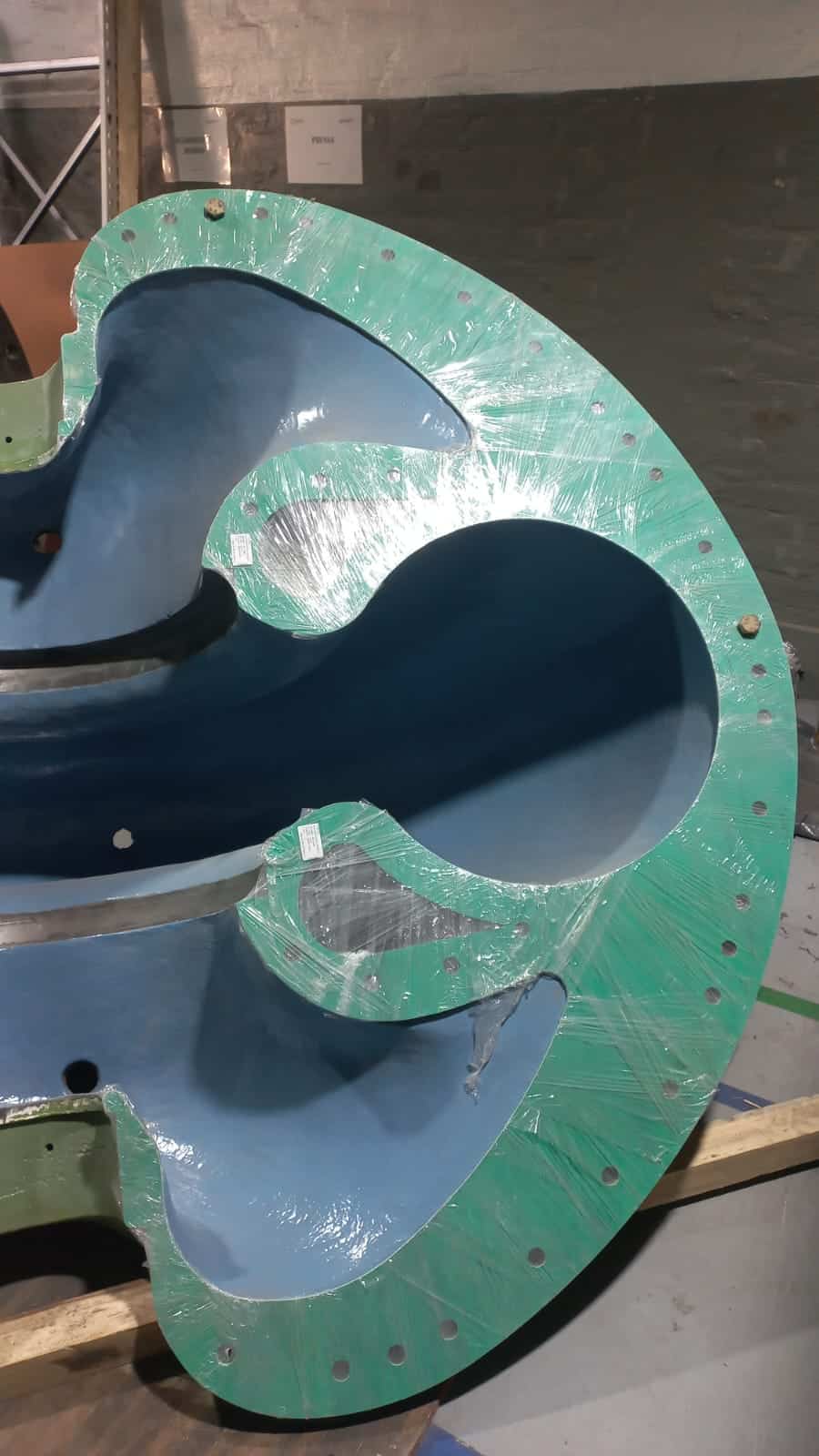
It sounded like an industrial treasure hunt: two bare gaskets appear at a shop, with no engineering drawings, no reference measurements, and no CAD files to accompany them. A complicated split pump is serviced by these unusual shapes, and the customer needs replacements as soon as possible. With no guidance at hand other than the final product, engineers must find a cost-effective way to reproduce these gaskets. For KLINGER Argentina, what could have been a daunting task was instead an interesting challenge, allowing the team to leverage both their skilled personnel and their state-of-the-art technological tools.
Contacts mentioned in the article:
Daniel Moreno Peralta, Internal Sales for Industry Division at KLINGER Argentina
Dylan Morales, Supervisor for CNC Machining at KLINGER Argentina
Decoding the physical clues
After Daniel Moreno Peralta of the sales team procured the needed samples from Seals Group, the production staff set to work on detailed analysis. Supervisor Dylan Morales and his specialists quickly realized that the complex geometry of the gaskets would not be satisfied by standard off the shelf stock. A combination of unusual shapes and unconventional perforations called for a bespoke solution: these gaskets would need to be recreated entirely from the ground up. The team tackled this exacting process with highly calibrated instruments, including a variety of calipers and protractors, to capture every minute detail. With the help of operator Pablo Moreno, each dimension was painstakingly recorded and transferred to a CAD program, allowing the team to build a fully traceable and reproducible template.
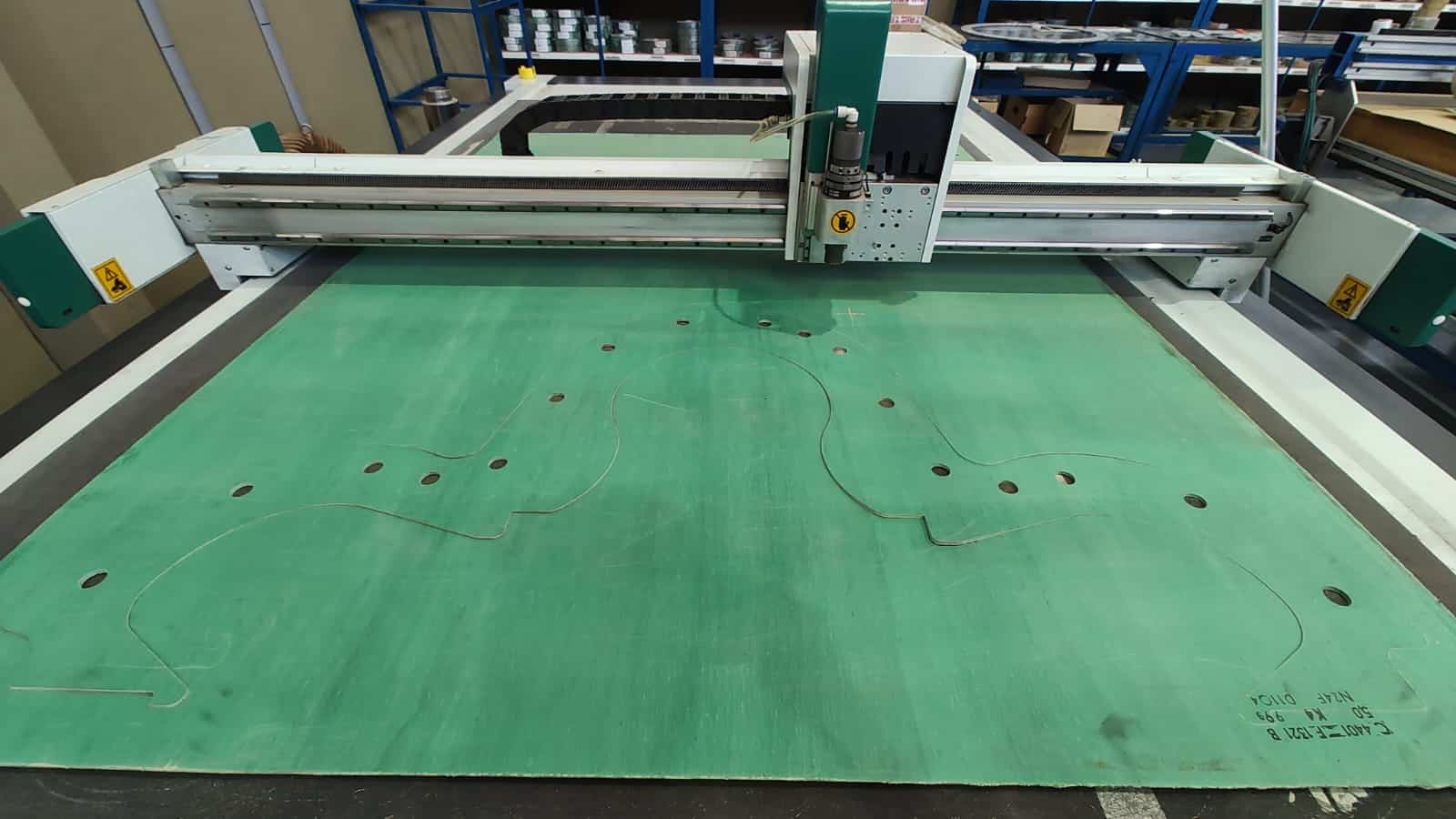
Once the digital version had taken shape, the KLINGER team was ready to try the real thing. Using the branch’s advanced CNC oscillating knife machine, they ran a series of cutting tests to recreate the original gaskets. While the group had worked diligently to achieve mathematical accuracy on paper, experience on the shop floor had taught these skilled experts that real world materials do not always behave in a predictable way during production. To account for this margin of error and to minimize product waste, alternate materials were used as gasket substitutes until the correct dimensions were finalized and verified. Each prototype was validated directly against the original samples, then fine-tuned until all dimensions were precise.
Unlocking the perfect fit
After multiple rounds of internal verification, the KLINGER team submitted the new drawings and sample pieces for formal review and approval. Seals Group quickly confirmed the conformity of the design and manufacturing immediately began, using their preferred high performance gasket material. Now, with the digitized specifications safely archived for future reference, the customer will always be able to order precision cut gaskets in an exact fit, with minimal delay and zero reliance on physical samples.
This project highlights KLINGER Argentina’s core strength in reverse engineering, combining hands on expertise with modern cutting technology. Continuous training, smart technology investments, and sheer technical skills all unite at KLINGER to prove that even the most intricate projects can be broken down, analyzed, and recreated with precision and consistency. Whether facing a system component of mysterious origin or a highly customized repair, the KLINGER team is always committed to proving that no missing blueprint is ever truly lost.